Tuesday, October 13, 2009

Date Recognition Endorsement?

Ok, has anyone read their Aviation Insurance Policy lately? Well, I had a few moments to read through the "red tape" to make sure that I am getting everything that I paid for. Specifically, I noticed that on the cover letter it didn't say anything about my liability insurance as an instructor, so before even taking another breath, I made sure that it was, in fact, in there.

Funny thing, these insurance policies. I found the usual - ... insurance company is not liable for terrorism, nuclear explosions, and someone blowing up the world. The interesting one was the "Date Recognition Endorsement". I don't see that one in my previous policy and thought I should read through it.

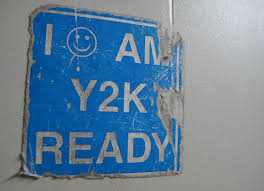
Believe it or not, the Y2K issue is not dead, and I guess may never be! My insurance will not cover me if operating an aircraft that I make a claim on where the claim is a result of some piece of hardware not recognizing the change of year 1999 to 2000 and properly sequencing the subsequent years.

It is an interesting endorsement nonetheless and its in there for a reason, so something must have happened. I just cant imagine what - like my autopilot pitched down 60 degrees and we crashed because the date wasn't set right? I HAVE been looking at my fuel totalizer a little closer lately - heck, its 2009, it might not be calculating fuel burn correctly!
I should go check my ADF while I'm at it - That sucker is OLD!

I think I'm safe, and believe that most people are. Just one of those fun insurance things where they can't cover their butts enough.

Saturday, October 10, 2009

In Flight Distractions

Today my wife and I flew out to see my grandmother. She fell and broke her hip, so we went to see her before she started therapy on Monday.

On the way home, my door popped open at some point after take off. At the time, I didn't know it and my co-pilot wife made a remark about how she felt cool air blowing around the cabin. I cranked up the heater, but could still feel some cool air. She then pointed to my door being open about 2 inches.

Yikes!

What a good example of a real live distraction. At the time, I was climbing out and picking up my IFR clearance in the air from South Bend Approach Control. I got so distracted by trying to close the door in the air, that I missed the whole clearance and needed them to read back the hole thing to me. At this point, I thought "what am I doing??" - Just fly the airplane - and that's exactly what I did the rest of the flight home. I left the door alone - the plane was just fine and it wasn't even that much louder in the plane.

My wife had some valid concerns about me falling out of the airplane, but I wasn't worried. I was belted in, and it would have required one hell of a push on the door to open it even a couple more inches (as I experienced as I tried to open it a little more so I could close it).

This is kind of funny, because one of the distractions that I like to give to my students is to sneak my arm around behind them and pop the window open on take off roll. Payback time, I guess. :)

Sunday, October 4, 2009

Are you a good flight instructor?

That is the question that was posed to me the other day when I was meeting with a potential new student. Wow, what a question.

So, do I answer that with a resounding YES and sound like a pretentious jerk, or do I say no and risk losing credibility with the guy and loose a client?

How about the middle of the road - "I think I'm an 'OK' flight instructor". Well, most people don't want mediocre, right? Especially when it comes to learning to fly a big, scary airplane in to the wild blue yonder!?! (Ok, the airplane is hardly big - its actually "micro" compared to some people's impressions of aircraft).

For what seemed like about a 5 minute stare in to space, I started to quickly think - "What is a GOOD flight instructor?"

Some might think that the best flight instructors know it all, exude an air of ultra-confidence, and have the demeanor of a military Sargent. I don't think that any of these are the case and I don't think that an instructor even NEEDS to know EVERYTHING. The best instructor knows how to tailor the information in such a manner that the student is able to learn it and find the answers to tough questions when the answers aren't already known. In the airplane, a demonstration of a maneuver, with cool, concise explanations, providing a safe environment (looking for traffic) is what you want.

So, what did I say? I said just what I wrote above and that I treat every student with respect. A round about way of saying "yes"?? You betcha!

Tuesday, September 15, 2009

Flying on Vacation

There is nothing cooler than renting an airplane while on vacation. I have had some amazing experiences while on vacation including being able to see the scenery from the air.

Sometimes people look at me funny when I tell them that "I flew on vacation." That comment will naturally get construed into something different like: "You mean, you flew commercially out to Phoenix?" or sometimes I will get "You flew YOUR plane to California?"
Nooooo - "I got checked out in an airplane and was able to rent it for a nice scenic flight."

Flying while on vacation can be a challenge. First of all, of the family members on vacation with you, its probably just you that wants to fly, and second, you will need to make time for the checkout and then the rental. This is a big commitment in time especially if your time is limited.

The other challenge is of personal nature. You are going to be flying in a strange airplane, in a strange area, with a map you probably looked over only moments before flying. When checking out in Phoenix, being able to fly amongst the mountainous areas was a treat and a challenge - From Chicago, the closest thing to a mountain is the 30 foot sand hill in the Indiana Dunes.


One of my most memorable experiences was in Maui, Hawaii. I got checked out in a Cessna 172sp. I think we logged .4 on the hobbs and did two take offs and landings. I took my sister-in-law and her husband up for a tour of some of the islands and then did the same with my wife. The sights were amazing.

Another memorable experience was in Arizona. Being that my wife has family in Phoenix, it only made sense to get checked out at one of the flight schools at Deer Valley Airport. I chose Westwind. Since it is a flight school, they follow very strict guidelines regarding aircraft checkouts, and basically made me do a Private Pilot Check ride. I had to take a written test, and do an hour of ground, followed by 1.5 in the air. I asked if we could do some commercial maneuvers instead of the routine private maneuvers, and he agreed. I think he was delighted that we were not following the same old syllabus he was grinding through hour after hour.

My two favorite experiences flying in a sectional other than my home area were my two most drastically different experiences. The laid back atmosphere of Hawaii and their instructors had me spending more time having fun flying myself than the Phoenix experience, but Phoenix was still really fun, and I am now checked out for life - I just have to show proof of currency, BFR, License, and medical.

Checking out in an aircraft while on vacation may be a commitment in time and a bit of a challenge, I guarantee it is worth it - Find the nearest airport next time you are on vacation and don't be intimidated by the checkout. Just think of it as a learning experience, because it really is!

Monday, September 7, 2009

Phrasology

Reading through the usual flying rags, I love reading articles on communications and talking on the radio - mentioning the need to be brief and deliberate with the phraseology. IFR Magazine comes to mind right now when I think of articles written on the subject with an emphasis on being super quick, concise and to the point with no extra pauses or chatter. It is generally understood that you should not waste any air time and that it is a precious commodity.

Flying regularly in the Chicago airspace, especially IFR, I totally understand the need to be brief and to the point, but sometimes I think there are some instances where adding a little "thanks for your help", or a "see ya later" after a hand off is nice. This is not appropriate for Chicago Approach (any time of day!), but hey, we are all human - adding that element to the drone of the day helps out everyone and I'm sure I speak for some of the lonely controllers over at KSBN on a not-so-busy labor day morning - apparent by the fact that we made a 20 mile straight in for Rwy 9R, taxi back and then departure to the north with no other aircraft in or outbound.

Thanks South Bend - you rock... Seeeee yaaaa.

Friday, September 4, 2009

AIM / FAR or FAR / AIM


There is nothing better than curling up with a good book late at night, in bed. Especially if it is the AIM / FAR! Nothing could put you to sleep faster.

Or possibly not?

The other night I dusted off my copy of the AIM / FAR to look up something in the AIM portion regarding flight plans. Boy, talk about getting re-acquainted with an old friend and to my surprise, I didn't fall asleep at all.

As I was thumbing through the various sections, I started to think - "this is probably the most forgotten book in aviation." There is so much information that I FORGOT was in there! Airport traffic pattern diagrams, Flight plan forms, communication phraseology, and the list goes on.

We as instructors take for granted the information we learn over the years and sometimes forget where we learned it. So much of this information is contained in the AIM and it begs our attention at least at BFR time. From now on, I think I am going to dedicate some time to reviewing some of the components of the AIM at BFR time. Im already getting my questions lined up...

"So, your IFR flight plan is automatically closed by the tower - How do you know for sure, and where does it say that?"

The 2010 edition comes out this month - I just ordered the new edition. As the title of this post questions - is it AIM/FAR or FAR/AIM - I don't have the answer to that one.

Monday, August 31, 2009

Flying in Ice

I was having the ground school portion of a Flight Review with a pilot the other night and the subject of airframe icing came up. The student said that they were terrified of flying in icing conditions. I told them that they should be!

The first thing that I asked was "what criteria do you use when determining whether to make a flight or not when it is winter time." The answer was a 45 degree ground temperature, and that they wouldn't fly higher than 4000 ft.

I would say that is an acceptable first step and should keep you safe, but a deeper analysis into the current weather conditions would be in order. The name of the game is "options". How thick is the cloud layer? Where is the freezing level? What kind of aircraft are you flying and does it have ice protection of any sort? Where are the bases relative to MEA?

The regulations say that we aren't allowed to fly in "known icing conditions." What this basically means to me is that if there are clouds, or precipitation, and the temperature at that altitude is less than freezing - That would be known icing - I GUESS?!?! I think the regulations are a little ambiguous so that it gives some wiggle room.

Bottom Line - if you don't have any anti-ice / de-ice equipment on your airplane, its best to be conservative. Take the car if you have to go that bad.