Friday, April 30, 2010

Where did my DG go?


A pilot friend of mine is gearing up to start his instrument training and admitted to me that he never looks at the directional gyro.

Really? Never looking at the DG? Apparently so!

Thinking about it, I guess I really don't look it too much when I am VFR either! I'm too busy looking out the window enjoying the scenery.

But NO, his eyes are fully glued to the GPS instead! The GPS? Well, yes, that is where all of the information is - and he is right... kind of.

Flying VFR is all about looking out the window, enjoying the scenery and having fun. IFR is all about focusing on the instruments, practicing precision and complying with ATC instructions. I think the best thing to do in this student's situation is to focus on correcting their instrument interpretation and aircraft control. Get through the instrument rating, and then take some time in focusing on VFR aircraft control without any aircraft instruments. This would also be a good segue into the commercial rating.

Monday, April 5, 2010

Touch and Goes Bad?

I teach in a club that has a rule that "touch and goes are not allowed." If a student wants to practice take-offs and landings, the rule is to make the landings in a "stop and go" fashion.

As far as the instructor is concerned, I think this is a good idea - especially in the beginning of teaching a student to land. It will allow the student to develop their technique for cleaning up the airplane for a proper take off and give the instructor time to verify everything.

The clincher was when I heard that touch and goes are actually bad for the airplane and engine. I am not sure why this would be, but am going to try to figure it out. It seems to me that if a student (or even an experienced pilot for that matter) would like to practice take offs and landings, that a touch and go would provide better engine cooling and less wear on the brakes. It would also provide the student with forward speed that would allow a quicker take off. (A stop and go would require more runway). One might even argue that the touch and go forces the student to divide attention inside and outside of the aircraft - A skill you are trying to teach anyway.

Alternatively, it also introduces risk. Doing a clean up on the aircraft while still in motion takes some level of skill. If there is a cross wind, that just ups the ante.

Tuesday, March 30, 2010

All dried up

Well, I think I am breaking the cycle of not having any students. Its been a while since I posted, but thats because nothing has been happening....
... but that is about to change.

One of my primary students is coming back, an instrument student says he is coming back to finish, I think I may have a commerical student, and my instrument student's father is considering his private pilot certificate.

Sheesh - when it rains, it pours. We'll see how it all plays out.

The challenge with the commercial student is that he has a Bonanza with a throw over yoke. According to the regulations, he cant receive any instruction in that aircraft (other than instrument instruction) unless it has full functioning dual controls. It appears that there is some movement to have this changed, but until then, we are going to have to get a dual yoke before we start anything.

I hope its a busy summer!

Tuesday, December 29, 2009

Reflections of a Pilot


I love books - especially older ones - and they have to be on aviation.

When I'm up at Oshkosh for the Airventure, Ill make sure I stop by some of the vendors selling old books.

I am at a disadvantage simply because "old books" and "military" usually go together. This is fine and I have a small collection of military books, but this is mostly because my father and grand father were both in the AirForce. For casual reading and for fun, I prefer a book that is geared toward the flying that I am immersed in - General Aviation and the theories and instructional methods behind it.

This past August, I picked up about 5 books that caught my eye. At an average price of $3 per book, I am a sucker to fill a bag.

I picked up a book by Len Morgan. Hmm, that was a name that I remembered - an old writer for Flying magazine. I loved reading his columns and since this book was a collection of his, all the better. An added bonus was that the book was published in 1987, so these were articles I never read before.

Some things in aviation never change, so when picking up an old book for cheap, you can tap the insights of some really talented people.

Sadly, Len Morgan died in 2005. Here is my favorite quote:
"There are two kinds of men in this world: the selfish ones that just want to make a name for themselves, and the generous people that just want to make a difference."


Tuesday, December 1, 2009

Passenger Comfort

On a flight from Chicago to Phoenix on Southwest Airlines, I wondering why the captain announced that "we were at our final cruising altitude of 28,000 feet. I guess there could have been many reasons for this, but opening up a magazine put a thought in my head about one possible reason - Turbulence.

I read a good article in Flying Magazine that said that the anxiety behind turbulence could be synonymous with a doctor administering medication.
The article goes on to illustrate the thought process:
He could have a needle behind his back, or it could be just a pill.
If it were a needle, it may pinch, or it may hurt really bad.

Who wouldn't be anxious not knowing what "might" happen.

Even as a pilot, I find myself consciously thinking about possible turbulence ahead and what this might mean for my passengers (even students). There is really no way to know. Ive been up on days with students that looked absolutely gorgeous and wound up putting a cap on the flight training for the day. Other times, the beautiful, bright day translated to an equally beautiful flight. Conversely, Ive experienced the same series on bad days.

I always try to tell my students to be mindful of passenger comfort. This is usually something pointed out when a student starts to get comfortable with angle of bank, but "taking a slow down" when the turbulence gets more than just a light chop is a sign of a real captain.


Sunday, November 15, 2009

Gearing up for ATP


Well, I started looking at my logbook to see where I am going to come up short as I start preparations for my ATP. I am blowing through a thousand hours and figured that now is the time to start looking at where I will need to focus for the minimum requirements.

I have a friend that was ready to start his ATP, but his night hours were really low. I have the same problem. I also have a cross country problem. It looks like I have about 300 hours of X/C but need a minimum of 500. At the rate I am going (instructing a lot of primary students) it will take a long time to accumulate that extra 200. I think this will be more difficult than grabbing the rest of my night (100 hours is required, I have a little over 60).

In any event, it looks like I will need to ramp up my cross country AND my night flying over the next two or three or four..... years to get this accomplished.

... In the mean time, I am really trying to find the time to get my Sea Plane Rating down in Florida. I think this will be really fun.

I also found out that since I have my commercial rating, I will need to do the Sea Plane rating to commercial standards, and will be issued a Commercial Sea Plane rating - I would be unable to get a "private pilot sea plane rating." How cool is that?!?!

Tuesday, October 13, 2009

Date Recognition Endorsement?

Ok, has anyone read their Aviation Insurance Policy lately? Well, I had a few moments to read through the "red tape" to make sure that I am getting everything that I paid for. Specifically, I noticed that on the cover letter it didn't say anything about my liability insurance as an instructor, so before even taking another breath, I made sure that it was, in fact, in there.

Funny thing, these insurance policies. I found the usual - ... insurance company is not liable for terrorism, nuclear explosions, and someone blowing up the world. The interesting one was the "Date Recognition Endorsement". I don't see that one in my previous policy and thought I should read through it.

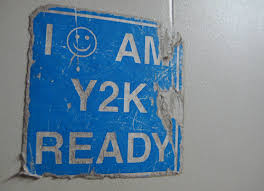
Believe it or not, the Y2K issue is not dead, and I guess may never be! My insurance will not cover me if operating an aircraft that I make a claim on where the claim is a result of some piece of hardware not recognizing the change of year 1999 to 2000 and properly sequencing the subsequent years.

It is an interesting endorsement nonetheless and its in there for a reason, so something must have happened. I just cant imagine what - like my autopilot pitched down 60 degrees and we crashed because the date wasn't set right? I HAVE been looking at my fuel totalizer a little closer lately - heck, its 2009, it might not be calculating fuel burn correctly!
I should go check my ADF while I'm at it - That sucker is OLD!

I think I'm safe, and believe that most people are. Just one of those fun insurance things where they can't cover their butts enough.